How The YouTube Parents Toolkit came to life
A Story About Me Getting It Wrong First
I’ve been a stay-at-home dad for almost ten years now. When my daughter was around seven, people started telling me she had potential.
She’d been doing cheerleading since she was three, competing since she was five, and a few parents pulled me aside one day and said she could probably build a following online. YouTube. Social media. Start early, grow it over time.
So I got curious.
I started researching YouTube channels, growth strategies, all that stuff. Then I asked my daughter if she wanted to make videos.
At first we tried bedtime stories because she loved books. But editing those took forever. Then I thought: why not tumbling videos? She already loved doing it anyway.
So we started posting shorts and simple tutorials. Cartwheels, bridges, back walkovers.
And slowly… it started growing.
When It Stopped Being About Her
That’s when my brain switched into strategy mode.
I saw other channels getting less views with way less effort and thought: if we do this properly, maybe we can really grow this thing.
So I did what I thought a supportive parent should do. I learned thumbnails, upload schedules,titles, algorithms, I even signed up for VidIQ.
* Now, Vidiq is an amazing tool that I recommend, but Im not gonna include an affiliate link for it here, because the whole point of this blog post, is to show you that is not what you and you child need now, that comes after, if they think its what they want for them. If that happens let me know, Im more than happy to show the tool in detail.
Then I told my daughter:
“Look, I know how to do this. You just focus on filming.”
She was eight. For a while, it worked.
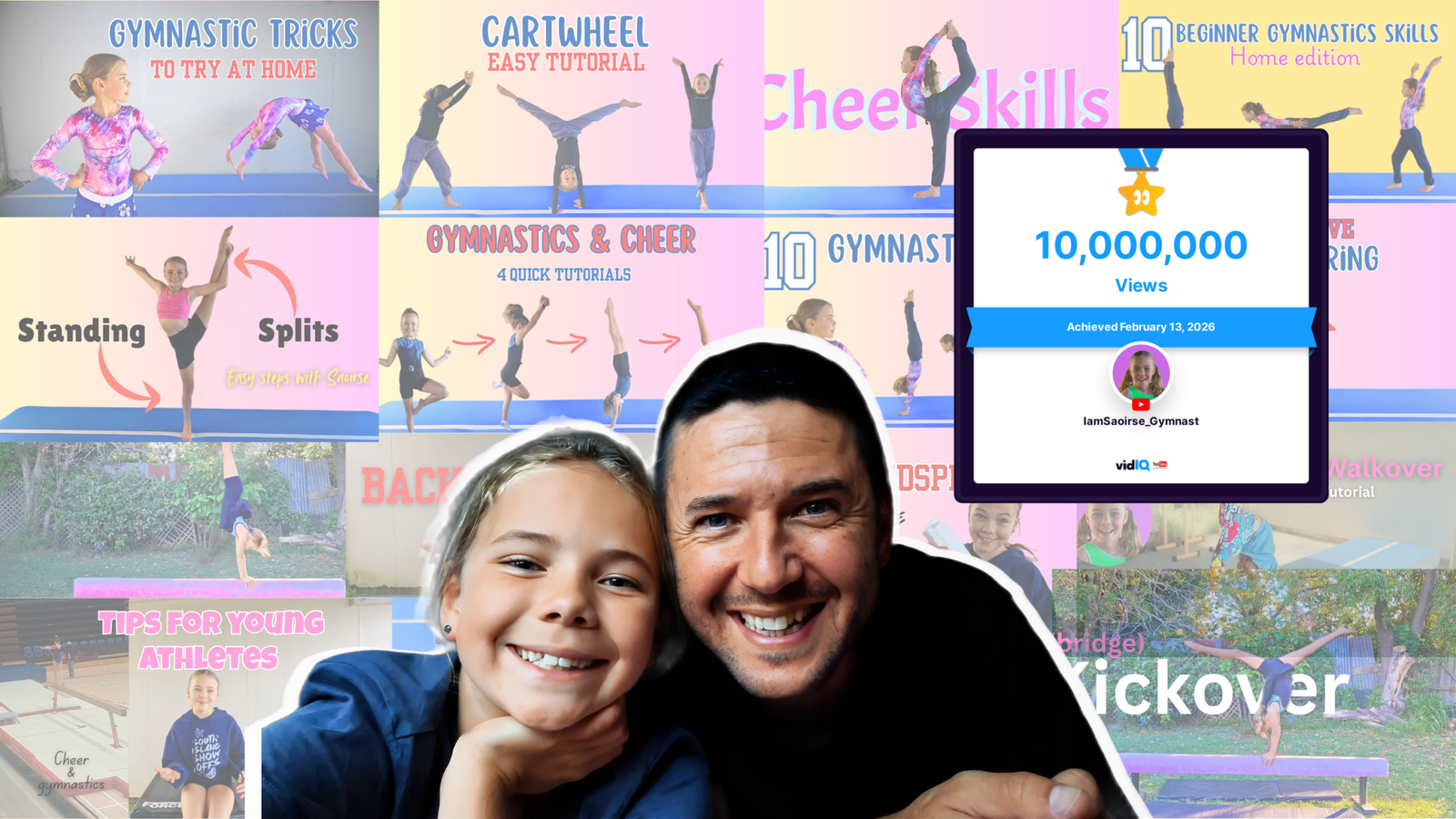
We hit 1,000 subscribers. Then 5,000 in a couple weeks. Eventually around 16,000 subscribers and over 10 million views.
Everything looked successful. But slowly I noticed something. Every time I said, “Want to film a video?” she seemed less excited.
We started arguing during recordings. I’d get frustrated. She’d get upset. And I completely missed what was happening.
Without realizing it, I had slowly started making it mine instead of hers.
The Wake-Up Call
When I finally stepped back, it hit me.
I got so focused on strategy and growth that I almost turned something she loved into something she dreaded.
And then I realized something bigger. Her biggest advantage on YouTube isn’t thumbnails, it’s not upload schedules…
It’s time.
She’s young, she has years to experiment, make mistakes, figure out who she is, change her mind ten times if she wants to.
She doesn’t need pressure,she doesn’t need optimization, she needs to enjoy it.
Why I Built The Toolkit 👉
Once I understood that, I kept thinking:
How many other parents are figuring this out the same way I was? Because when I looked around, I saw two extremes.
Some parents were involved and guiding things carefully. Others seemed completely hands-off.
But most of us are probably somewhere in the middle.
Just trying our best and making it up as we go. So I built something I wish I had at the beginning.
The YouTube Parent Toolkit isn’t about growth hacks or algorithms. It’s about boundaries, safety, conversations, and keeping things fun.
Inside there’s stuff like family agreements, safety rules, weekly check-ins, conversation prompts, and ways to catch pressure before it becomes a problem.
Because this isn’t really about building a channel. It’s about protecting the experience.
One Last Thing
My daughter still has her channel. We haven’t uploaded in months, and funny enough, the numbers are still going up.
But honestly, even if they weren’t, I’d still choose this approach now. Post when she wants, make what she enjoys, go at her pace.
Because if I learned anything from all this, it’s that people eventually connect with people being themselves.
And kids already have the thing adults are always chasing:
Time, and plenty of it.
You can checkout “The YouTube Parents Toolkit” bellow.